
How Technicians Spot Refrigerant Leaks at Home
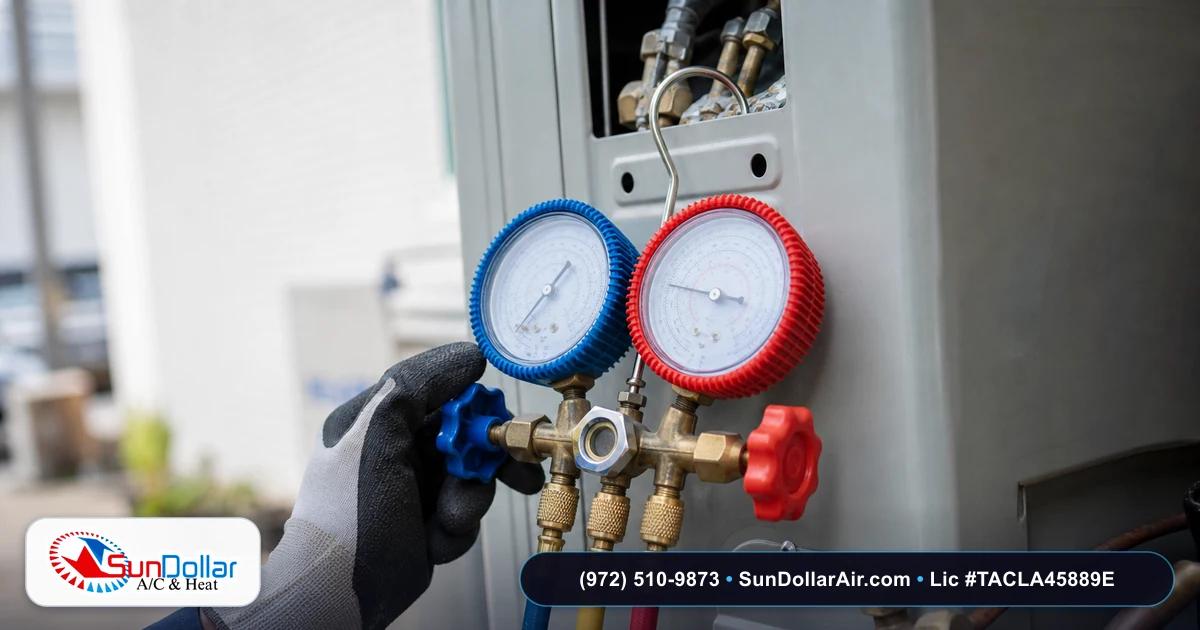
A Texas summer can expose a refrigerant problem fast. The thermostat says the AC is running, air is moving through the vents, and yet the house keeps getting warmer. When technicians spot refrigerant leaks, they are not looking for a minor inconvenience. They are finding the reason an air conditioner or heat pump may be working harder, cooling less, and putting extra strain on expensive components.
Refrigerant does not get used up like gas in a car. A properly sealed system should keep the same refrigerant charge for years. If the level is low, there is usually a leak somewhere in the system. The right answer is to find the source, explain the repair options clearly, and make the most practical recommendation for your home.
Signs You May Have a Refrigerant Leak
A leak is not always obvious. In many homes, it starts as a gradual loss of comfort rather than a sudden breakdown. You may notice that your system runs longer than usual, especially during the hottest part of the afternoon, but rooms still feel sticky or warm.
Other common signs include warm or only mildly cool air from supply vents, ice forming on the refrigerant line or indoor equipment, a new hissing sound near the unit, and electric bills that rise without a clear explanation. Some homeowners also notice that one area of the house feels comfortable while another never catches up.
These symptoms can point to other problems too. A dirty filter, airflow restriction, thermostat issue, or failing component can create similar complaints. That is why a trustworthy diagnosis matters. Guessing at the cause or adding refrigerant without testing can leave the real problem in place.
How Professionals Spot Refrigerant Leaks
Finding a leak often takes more than one test. The leak may be at an accessible connection outside, inside the indoor coil, or in a line running through part of the home. A good technician starts by confirming the system's performance and then narrows down where refrigerant may be escaping.
First, They Check System Operation
A technician checks temperatures, pressures, airflow, electrical readings, and the condition of major components. These measurements help confirm whether the system is actually low on refrigerant and whether another issue is contributing to poor cooling.
This step protects homeowners from unnecessary work. Low pressure alone does not tell the full story. System readings have to be interpreted alongside the equipment type, outdoor temperature, indoor conditions, and the way the system is operating that day.
Then, They Inspect the Likely Trouble Spots
Many leaks occur at fittings, service valves, coils, or areas where copper lines have rubbed against another surface over time. Technicians look for oily residue around refrigerant connections because refrigerant carries oil through the system. Where oil escapes, refrigerant may be escaping too.
They also inspect coils for corrosion and damage. Indoor evaporator coils can be harder to access, and small leaks can be difficult to see with the naked eye. A visual check is useful, but it is only one part of a proper diagnosis.
Electronic Leak Detection Finds Small Escapes
An electronic leak detector is designed to sense refrigerant vapor. The technician slowly checks suspected areas, including joints, valves, coils, and line connections. Done carefully, this test can identify leaks that have no visible residue and make no sound.
The key word is carefully. Air movement, contamination, and the location of the leak can affect results. An experienced technician does not wave a detector around for a quick answer. They confirm the reading and use other evidence when needed.
Pressure Testing Can Confirm the Source
If the system is low enough that a leak cannot be found during normal operation, a technician may recover the remaining refrigerant and pressure-test the system with dry nitrogen. This allows the system to be tested without releasing refrigerant into the air.
Pressure testing can reveal whether the system holds steady or loses pressure over time. A soap solution applied to accessible joints can create bubbles at a leak point. This method is especially helpful for finding leaks around connections and valves.
UV Dye Has a Place, but It Is Not Always the First Choice
UV dye may be used in certain situations to help locate a small or intermittent leak. The dye circulates with the refrigerant and can leave a visible trace under ultraviolet light. It can be useful when a leak is difficult to reach or has not shown up through other testing.
Still, dye is not a shortcut for a complete diagnosis. Whether it makes sense depends on the equipment, the suspected leak location, and the service history. The best approach is the one that gives your technician a reliable answer without adding work you do not need.
Why Adding Refrigerant Alone Is Not a Repair
Adding refrigerant can improve cooling for a while, but it does not seal a leak. Think of it like refilling a tire that has a nail in it. The tire may hold air temporarily, but the underlying issue remains.
A recharge may be appropriate after the leak is found and repaired, or in limited cases while a homeowner considers a larger repair. But simply topping off a leaking system can lead to repeat service calls, higher operating costs, and more wear on the compressor. The compressor is one of the costliest parts of an AC or heat pump system, so protecting it matters.
A repair-first company should explain this plainly: what was found, how confident the test results are, what the repair involves, and what the next practical step will cost. No runaround and no pressure to replace equipment before the facts support that decision.
Repair or Replacement: What Makes Sense?
Not every refrigerant leak means replacement is the right answer. If the leak is at a service valve, connection, or accessible line, a targeted repair may be the sensible and cost-effective path. After the repair, the system can be vacuumed, recharged to manufacturer specifications, and tested again for proper operation.
The decision gets more complicated when the leak is in a coil, the system has a history of repeated leaks, or the equipment is older and facing multiple repairs. Refrigerant type also matters. Some older systems use refrigerants that are less available and more expensive than current options. In that case, the repair cost may still be reasonable, or replacement may offer better long-term value. It depends on the actual condition of the system, not a sales quota.
Ask for the options in plain language. A good recommendation includes the immediate repair, the likely life expectancy after repair, and the cost comparison if replacement is worth considering. You should have enough information to make a confident decision without feeling cornered.
What to Do When Your Cooling Starts Falling Behind
If your AC is running constantly, icing up, or no longer cooling the home well, schedule a professional diagnostic visit before the issue gets worse. Continued operation with a low refrigerant charge can create more stress on the system, particularly during a long stretch of North Texas heat.
Before the appointment, make a note of what you have noticed: when the problem started, whether it happens all day or only during extreme heat, any ice you have seen, and whether comfort has changed in every room or just one area. Those details help the technician work more efficiently.
At SunDollar A/C & Heat, the goal is straightforward: identify the real problem, repair what makes financial sense, and explain the choices before work begins. A refrigerant leak is frustrating, but it does not have to turn into an automatic replacement conversation. The right diagnosis gives you a clear path back to dependable comfort.
Local HVAC Repair & Tune-Ups in Athens, Mabank & Eustace, TX
Athens, TX (Henderson County): Athens homeowners get the same honest repair-first approach we bring to every East Texas job. Whether it's a brick ranch home, historic property near the square, or newer build near Lake Athens, we've seen and fixed it all.
Stop Paying for Preventable Breakdowns — Cover Every AC Unit at Your Home for $19.85/mo
Our $19.85/mo Access Comfort Care Agreement covers EVERY residential HVAC unit at your address (Spring & Fall 10-step tune-ups, Priority heatwave/freeze dispatch, 10% off repairs & 10-yr OEM warranty protection). Need immediate help? Every repair includes Free Diagnostics with Repair ($85 standalone if repair is declined) and $0 Free Second Opinions on competitor replacement quotes.