
Dallas Furnace Thermostat Settings That Save Money
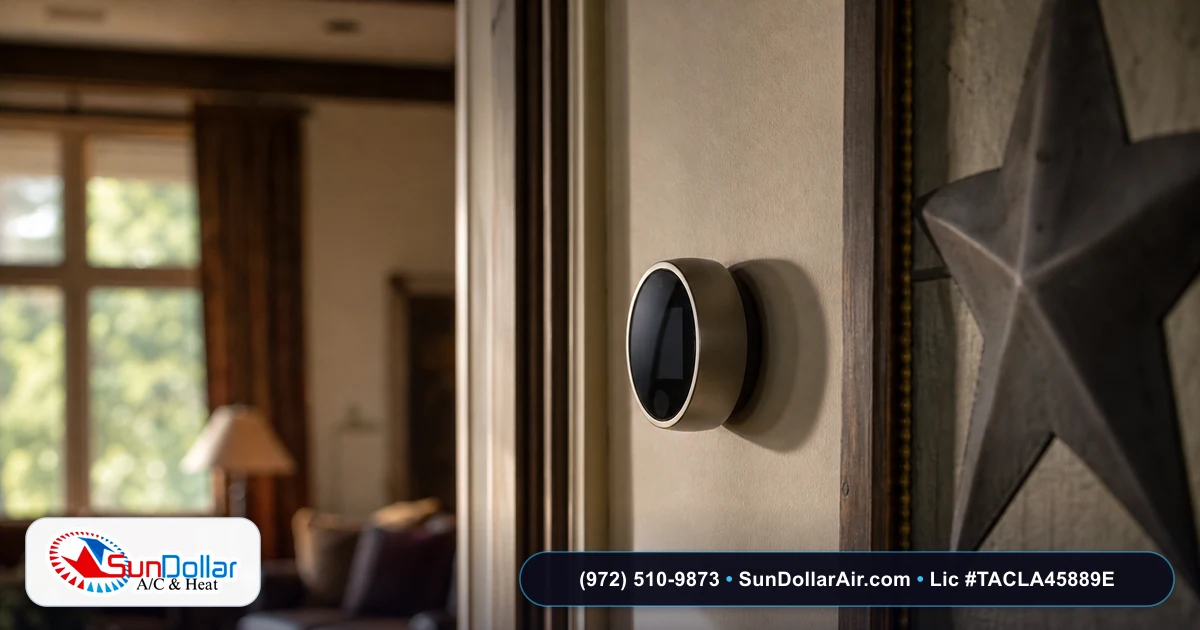
A Dallas cold front can turn a 72-degree afternoon into a freezing night before bedtime. That is why Dallas furnace thermostat settings should be practical, not one fixed number you use all winter. The right setting keeps your family comfortable, limits unnecessary runtime, and helps you spot when a furnace is working harder than it should.
For most homes, 68 degrees while people are awake and home is a sensible starting point. From there, adjust based on how your home holds heat, who is in the house, and whether your system can maintain the temperature without running nonstop. Comfort matters, but so does avoiding the costly habit of turning the thermostat way up every time the weather changes.
Start With 68 Degrees While You Are Home
The U.S. Department of Energy commonly recommends 68 degrees during winter when people are home and awake. In North Texas, that setting works well for many households because winter temperatures often swing quickly rather than staying bitterly cold for weeks at a time.
If 68 feels cool in your home, try 69 or 70 before making a bigger jump. A one- or two-degree adjustment is usually enough to find the comfort level your family prefers. Raising the thermostat to 75 will not make the furnace heat the house faster. It only tells the system to run longer until it reaches that higher target.
That distinction matters on a cold Dallas morning. If your home is at 64 and you want 68, set it to 68. The furnace will run until it gets there. Setting it higher can lead to overheated rooms, extra fuel use, and the familiar cycle of turning the thermostat back down a short time later.
Dallas Furnace Thermostat Settings for Sleep and Away Time
When everyone is asleep, a setting between 60 and 65 degrees is a reasonable range for many Dallas homes. Some families prefer 64 to 66 degrees, especially with young children, older adults, or rooms that tend to feel colder than the rest of the house. There is no prize for being uncomfortable just to save a little energy.
For a workday or a longer time away from home, lowering the heat by about 5 to 8 degrees can reduce unnecessary heating. If your usual daytime setting is 68, try 62 to 63 while the house is empty. Avoid dropping the temperature too low during a hard freeze. Your home, plumbing, insulation level, and pipe locations all affect how low is too low.
A steady schedule is usually more useful than constant adjustments. For example, set the heat to come up shortly before the first person wakes up, hold near 68 while the house is occupied, then ease back for sleep. A programmable thermostat can manage this without making you think about it every day.
Account for Dallas Weather Swings
Dallas winters are not like winters in Minneapolis. One week may bring mild afternoons, and the next may bring a freeze with strong wind. Those swings make it tempting to constantly chase the outdoor temperature on the thermostat. Usually, that is not necessary.
Instead, set a comfortable indoor target and let the system do its job. On mild days, your furnace may run very little. During a cold snap, it will naturally run longer. Longer run times are not automatically a problem if the home reaches the set temperature and the system cycles off normally.
What deserves attention is a furnace that runs for long periods but cannot get close to the thermostat setting. If the thermostat is set to 68 and the house stays at 62 or 63, do not keep raising the setting. The issue may be airflow, a thermostat problem, a dirty filter, a fuel or ignition concern, or a furnace that needs service. A higher number will not correct a heating problem.
Keep the Temperature Changes Reasonable
A furnace is built to cycle, but large, repeated temperature changes can make your home less comfortable and your energy use harder to control. A practical rule is to move the setpoint a few degrees, then give the system time to respond.
If you have a conventional gas or electric furnace, a setback during sleep or away time generally makes sense. If your home uses a heat pump with auxiliary heat, the best strategy can be different. Large temperature increases may trigger more expensive backup heat, depending on the system and thermostat programming. In that case, smaller scheduled changes are often the safer bet.
Not sure what type of heating system you have? Look at the outdoor equipment and the thermostat display, or ask a technician during routine maintenance. Clear answers are better than guessing, especially when a thermostat setting could affect operating cost.
Check the Thermostat Location Before Blaming the Furnace
Your thermostat only responds to the temperature where it sits. If it is near a kitchen, exterior door, sunny window, fireplace, or supply vent, it may get a misleading reading. That can cause parts of the home to feel too warm or too cold even when the thermostat appears to be working correctly.
A thermostat located in a central hallway or main living area usually gives a more reliable picture of whole-home comfort. Closed doors can also affect the balance from room to room. Bedrooms at the far end of the house, rooms over a garage, and spaces with lots of windows may need different expectations than the living room.
Before assuming you need new equipment, look for the simpler explanation. Replace a clogged air filter on schedule, make sure supply vents are open and not blocked by furniture, and check that the thermostat has working batteries if it uses them. These basic items can make a real difference in airflow and temperature control.
When Your Settings Point to a Furnace Problem
Thermostat settings should be easy: choose a reasonable temperature, and your furnace should keep up. When that is not happening, the symptoms can tell you something useful.
Call for professional heating service if your furnace repeatedly turns on and off within a few minutes, blows cool air, makes new banging or squealing noises, produces burning or gas-like odors, or will not hold the selected temperature. Also take seriously a sudden jump in heating costs with no major change in weather or thermostat habits.
If you smell gas, leave the home, avoid switches or open flames, and contact your gas utility or emergency services from a safe location. For other heating concerns, a proper diagnosis should come before a replacement conversation. Many comfort problems have repairable causes, and homeowners deserve to know what failed, what it costs to fix, and whether repair makes financial sense.
Use Smart Thermostats With a Simple Plan
A smart thermostat can be helpful, but it is not magic. The value comes from a schedule that matches your household, not from constantly checking an app or letting the settings change every hour.
Start with one comfort temperature and one setback temperature. Give the schedule several days, then adjust in small increments. If your home is empty at unpredictable times, location-based features may help, but do not allow the house to get excessively cold during freezing weather.
Smart thermostat alerts can also be useful when they show unusual runtime or a temperature drop while you are away. Treat those notices as an early warning, not a diagnosis. A thermostat can tell you that comfort is off. It cannot reliably tell you why.
Comfort Should Not Require Guesswork
The best furnace setting is the lowest temperature that keeps your household comfortably warm without making the system struggle. For many Dallas homeowners, that means 68 while home, a modest setback for sleep or time away, and no dramatic jumps when a cold front arrives.
If your furnace cannot maintain a reasonable setting, the answer is not to keep turning the thermostat higher. A repair-first inspection can identify whether the issue is small, urgent, or worth planning for. SunDollar A/C & Heat believes homeowners should get clear answers and fair options, not pressure to replace equipment that can still be repaired.
A comfortable home should feel dependable on the coldest night of the season. Set the thermostat with a plan, pay attention to changes in performance, and get help when the system gives you a reason to question it.
Local HVAC Repair & Tune-Ups in Dallas, Richardson & Addison, TX
Dallas, TX (Dallas County): From North Dallas, Preston Hollow, and Far North Dallas to Lake Highlands, Lakewood, Uptown, Highland Park, and Oak Cliff — we serve all Dallas neighborhoods with flat-rate pricing, Free Diagnostics with Repair, and our repair-first approach. No hidden charges.
Stop Paying for Preventable Breakdowns — Cover Every AC Unit at Your Home for $19.85/mo
Our $19.85/mo Access Comfort Care Agreement covers EVERY residential HVAC unit at your address (Spring & Fall 10-step tune-ups, Priority heatwave/freeze dispatch, 10% off repairs & 10-yr OEM warranty protection). Need immediate help? Every repair includes Free Diagnostics with Repair ($85 standalone if repair is declined) and $0 Free Second Opinions on competitor replacement quotes.